
Rule34 Explained: Free Access, HD, Tags & Safety
If you have spent enough time around memes, anime communities, gaming forums, or social platforms, you have probably seen the term rule34 appear without much explanation. To newcomers, it can look like the name of a website, an app, or even an official internet standard. In reality, its original meaning is much broader and comes from early online culture.
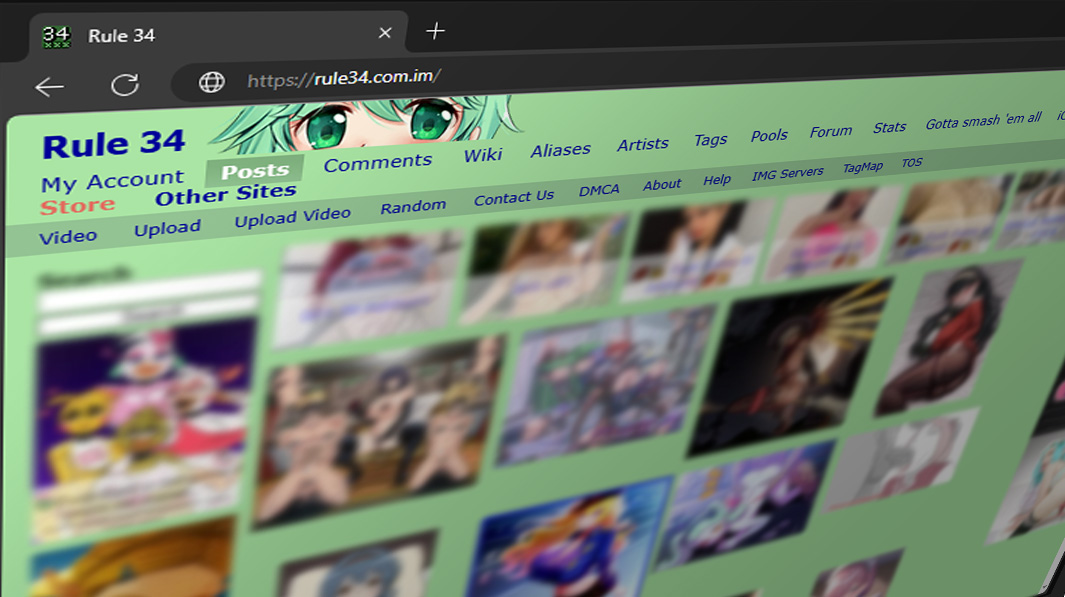
Rule34 is an old internet meme built around the idea that virtually any recognizable subject can eventually inspire adult-oriented material online. The phrase grew out of early web culture and later became closely associated with fan art, imageboards, tagging communities, and searchable archives.
Today, people may use the term in several ways. Sometimes they mean the original internet joke. In other situations, they are referring to adult-oriented fan art in general or to websites that adopted Rule34 terminology. Understanding that distinction makes the history, booru connection, safety questions, and modern use of the expression much easier to understand.
What Is Rule34?
Rule34 is an internet saying suggesting that if something exists, adult material related to it probably exists somewhere online.
It is not a technical protocol or a rule controlled by an internet authority. Instead, it belongs to a humorous collection commonly known as the Rules of the Internet, a loose set of jokes and observations that circulated through early online communities.
The expression became memorable because of its deliberately exaggerated message that virtually no topic, fictional universe, character, or cultural phenomenon is completely untouched by adult reinterpretation.
Over time, the term developed two overlapping meanings. The first is the original internet meme. The second is a shorthand label used for certain adult-oriented fan-art communities and image archives.
"Rule34 lasted because the basic idea can be understood almost instantly, even by someone who knows nothing about the communities where it first spread." — Jordan Mercer, fictional digital-culture analyst
Where Did Rule34 Come From?
The commonly documented origin of Rule34 goes back to the early 2000s and a webcomic created by Peter Morley-Souter, who used the online name TangoStari.
The comic used the phrase "Rule #34" while joking about unexpectedly discovering adult parody material based on a familiar fictional property. The creation is generally associated with 2003, while copies and references became increasingly visible online during the following years.
What made the phrase important was not the original example itself, but how easily other internet users could reuse it. Someone could mention a new fictional character, game, movie, cartoon, or obscure fandom, and another person could respond with "Rule 34." The implication was already understood.
When Was Rule34 Created?
Rule34 is generally traced to 2003. Its wider popularity developed gradually as the expression moved through forums, imageboards, internet dictionaries, meme communities, and collections of the so-called Rules of the Internet.
So there is a useful distinction between the creation of the phrase and its rise as a widely recognized part of internet vocabulary. The first happened in the early 2000s; the second unfolded over several years.
Is Rule34 an Actual Internet Rule?
No. Despite the word "rule," it is essentially internet folklore.
The broader Rules of the Internet were never maintained by one official organization. Different communities circulated different versions, changed the numbering, rewrote individual entries, and added new jokes over time.
They are better understood as cultural sayings than formal rules. Rule34 simply became one of the entries that survived far beyond the original communities that spread it.
This also explains why no single person, platform, or company can be treated as the universal operator of Rule34 as a concept.
What Is the Connection Between Rule34 and 4chan?
Rule34 is strongly associated with 4chan-era internet culture, but saying that 4chan directly created the original phrase would oversimplify its history.
The expression appeared earlier, while anonymous message boards and related communities helped spread versions of the Rules of the Internet during the mid-to-late 2000s. As those jokes moved through imageboards, forums, IRC communities, meme sites, and anonymous discussion spaces, Rule34 became increasingly recognizable.
A simple way to understand the relationship is this: Rule34 existed before its strongest connection with 4chan, but 4chan-era culture helped amplify and normalize the expression.
Why Is Rule34 Connected With Anime?
Anime and manga communities developed enormous fan-art ecosystems, and that made them a natural environment for Rule34 references.
Another major reason is the popularity of booru-style image archives. These websites organize huge quantities of images using detailed tags rather than relying only on titles, timelines, or recommendation feeds.
A single illustration can be categorized by character name, franchise, artist, visual traits, content rating, media format, and many other descriptive attributes. That structure makes highly specific searches possible even when an archive contains millions of posts.
Anime fandom adopted this tagging model extensively, which helped create a strong association between Rule34, anime characters, fan art, and booru-style websites.
Rule34 vs Booru: What Is the Difference?
The terms often appear together, but they describe different things.
| Term | Meaning | Main Role |
|---|---|---|
| Rule34 | An internet meme and cultural expression associated with adult fan-created material | Internet culture |
| Booru | A tag-driven image archive or imageboard format | Media organization and search |
| Danbooru | An influential booru platform strongly associated with anime-style artwork | Tag-based image archiving |
| Rule34 site | A website using Rule34 terminology or focusing on related material | Hosting or indexing content |
A booru does not automatically mean Rule34. Booru technology can be used for many types of image collections, including general artwork, fandom archives, character databases, and communities with multiple content ratings.
Likewise, Rule34 is not a technical format. It is a cultural concept that some booru-style websites happen to specialize in.
How Do Rule34 Sites Usually Work?
Individual Rule34 sites can differ significantly, but many borrow the basic structure of booru-style archives.
Instead of endlessly scrolling through a conventional social-media feed, visitors often search using combinations of tags. Imagine a giant visual library where every image can carry dozens of labels. By combining those labels, the user can narrow a huge archive to a very specific set of results.
A character name might be combined with a franchise tag, artist name, media type, or descriptive attribute. Some platforms also support negative tags, allowing users to exclude categories they do not want to see.
Depending on the platform, additional tools may include favorites, comments, saved searches, collections, voting systems, tag editing, or personalized filtering.
Does Rule34 Require an Account?
Rule34 itself requires no account because it is a concept rather than a single service.
Individual websites set their own registration policies. Some allow most browsing without an account but reserve features such as favorites, uploads, commenting, advanced filters, or saved preferences for registered users.
For that reason, statements such as "Rule34 always requires registration" or "Rule34 never requires registration" are too broad. The answer depends entirely on the website being discussed.
Is Rule34 Free?
The meme itself obviously has no price.
Many websites associated with Rule34 can be browsed without paying, although their business models differ. A platform may rely on advertising, donations, memberships, optional premium functions, or another funding model.
The important point is that Rule34 should not be treated like the name of one company with one universal pricing structure.
What Is the Official Rule34 Site?
There is no universally official website for Rule34 itself.
This is one of the most common misunderstandings surrounding the keyword. The expression existed as part of internet culture before modern archives and websites began incorporating Rule34 into their names.
Several websites may use similar terminology, but sharing the phrase does not make one of them the owner of the original meme.
"Treat Rule34 more like a piece of internet vocabulary than a commercial brand. Multiple communities can use the term without representing the concept as a whole." — Jordan Mercer
This distinction also matters when evaluating websites. Similar-looking names or domains do not necessarily belong to the same operator.
Is Rule34 Safe?
There is no universal yes-or-no answer because Rule34 is not one website.
When people ask whether Rule34 is safe, they are often combining two different questions: whether the content is appropriate for them and whether a particular website is technically trustworthy.
Content Safety
Rule34-related websites are generally associated with adult or NSFW material. Anyone who does not want to encounter mature imagery should avoid such platforms and should not assume that thumbnails, search results, advertisements, or recommendations will always be filtered.
Individual services may also use age gates or other access requirements depending on their policies and operating region.
Technical Safety
A website containing adult material is not automatically infected with malicious software. However, unfamiliar websites of any type can expose visitors to misleading advertisements, fake download buttons, imitation domains, suspicious redirects, notification prompts, or questionable browser extensions.
The better question is therefore not simply "Is Rule34 safe?" but rather "Can I verify that the specific website I am visiting is trustworthy?"
Does Rule34 Have Viruses?
Rule34 as a concept cannot contain a virus. Risks come from particular websites, advertisements, files, applications, extensions, or redirects encountered while browsing.
Extra caution is sensible when a page suddenly requests an unfamiliar download, asks for unusual browser permissions, opens repeated redirects, or insists that special software is required to view ordinary images.
"The reputation of a keyword tells you very little about the security of a particular domain. Website security should always be evaluated site by site." — Jordan Mercer
Simply viewing media through an updated browser is different from downloading and running unknown software, so visitors should be especially cautious around executable files and unofficial installers.
Is Rule34 Safe on Mobile?
The same general security principles apply to smartphones and tablets.
Modern mobile browsers include substantial built-in protections, but users can still expose themselves to risk by installing unofficial applications, granting excessive permissions, accepting misleading notification prompts, or entering credentials into imitation pages.
Keeping the browser and operating system updated, checking domain names carefully, and avoiding unnecessary downloads can reduce common risks. Mobile users should also pay attention to intrusive advertisements because smaller screens can make misleading buttons easier to tap accidentally.
Is Rule34 Safe to Download From?
Downloading files introduces additional risk compared with simply viewing webpages.
Ordinary image and video files are generally different from executables, installation packages, scripts, browser extensions, and unknown compressed archives. Users should be particularly cautious when a website claims that special software must be installed just to access standard media.
For ordinary image browsing, installing unfamiliar programs should rarely be necessary.
What Is the Rule34 App?
There is no single universal Rule34 app representing the original internet meme.
Searches for that phrase may return third-party apps, unofficial clients, wrappers, or websites designed for mobile browsers. Because these products may come from unrelated developers, their privacy practices and permissions can vary substantially.
Before installing an unfamiliar application, users should check who publishes it, where it is distributed, what permissions it requests, how updates are delivered, and whether installing an app is even necessary for the intended use.
Does Rule34 Have Age Restrictions?
Rule34 as an internet expression has no age setting of its own. Websites containing adult material, however, may establish minimum-age requirements, age gates, account conditions, or regional access policies.
Those requirements are determined by the individual platform rather than by Rule34 as a cultural concept.
Why Is Rule34 Mentioned on Twitter or X?
Rule34 frequently appears on X and other social networks because the term has become part of general internet vocabulary.
It may appear as a joke after a new character is revealed, as commentary about fan-art culture, during discussions of internet history, or as shorthand for the speed at which online fandoms create derivative material.
Not every post mentioning Rule34 contains adult imagery. Sometimes the phrase itself is the entire joke.
The same kind of references can appear on Reddit, Discord, gaming forums, meme communities, comment sections, and other social platforms.
What Happened to Rule34?
Nothing happened to Rule34 in the sense of the original expression disappearing. It simply evolved as the internet changed around it.
What began as an early-web joke became part of mainstream online vocabulary and developed strong connections with fandom culture, imageboards, anime communities, gaming communities, and tag-driven image archives.
Specific websites may change domains, shut down, gain new operators, redesign their interfaces, or disappear entirely. Those events should not be confused with the broader Rule34 meme, which is independent of any individual platform.
What Are Rule34 Alternatives?
The most useful alternative depends on why someone is searching in the first place.
A person interested mainly in fan art may prefer mainstream art communities with strong mature-content controls. Someone interested in image organization might prefer a traditional booru with detailed character, artist, franchise, and descriptive tags. Others may simply want fandom-specific galleries or safer image archives with stronger filtering.
Instead of choosing solely by name, it is more useful to compare platforms based on tag quality, filtering tools, moderation, search precision, privacy practices, and usability.
Which Rule34 Alternatives Have Better Tag Systems?
Booru-style platforms are notable for their ability to describe images through multiple layers of metadata.
A well-maintained archive may distinguish between artist tags, character tags, franchise tags, general descriptive tags, content classifications, and technical metadata. When those categories are applied consistently, users can construct extremely precise searches.
For example, instead of searching only for a character name, a user could theoretically combine the character with a franchise, visual characteristic, artist, or media format. The same principle also allows categories to be excluded.
This deep searchability is one reason the booru model remains influential even in an era dominated by algorithmic social-media feeds.
How to Approach Rule34 Sites More Safely
If an adult user chooses to visit this category of website, basic web-security habits can make a substantial difference.
- Check the domain carefully. Similar names can belong to unrelated websites.
- Keep the browser updated. Current security patches help protect against known browser vulnerabilities.
- Avoid unnecessary software. Image browsing normally should not require an unfamiliar application or extension.
- Be cautious with redirects and advertisements. Third-party advertising systems may behave differently from the main website.
- Protect account credentials. Avoid reusing important passwords across unrelated services.
These precautions are not unique to Rule34. They are useful whenever visiting unfamiliar websites, especially those supported by aggressive advertising or user-uploaded content.
Why Has Rule34 Survived for So Long?
Rule34 is an unusually durable example of internet folklore.
The idea is short, easy to understand, highly reusable, and adaptable to almost any new fandom. Every new game, animated series, movie, fictional character, mascot, or viral phenomenon creates another opportunity for someone to reference the same old joke.
Many early internet memes vanished when their original communities disappeared. Rule34 was different because it was portable. It moved from a webcomic into forums, imageboards, meme databases, social networks, gaming communities, fan-art archives, and modern social platforms.
That portability is one reason someone discovering the phrase today may not realize that its history stretches back more than two decades.
Conclusion
Rule34 becomes much easier to understand once the meme is separated from the websites that use its name.
At its core, Rule34 is an early internet saying about the seemingly limitless ability of online communities to reinterpret recognizable subjects through adult fan-created material. The phrase emerged in early-2000s web culture and later became closely associated with fan art, anime fandom, imageboards, and booru-style tagging systems.
There is no single official Rule34 platform, so questions about registration, mobile use, downloads, accounts, security, or age restrictions depend on the specific website involved.
From an internet-history perspective, perhaps the most interesting aspect of Rule34 is not the material associated with it, but the survival of the phrase itself. A tiny joke from the early web became a piece of vocabulary recognizable across multiple generations of online culture.
Frequently Asked Questions
What does Rule34 mean?
Rule34 is an internet meme suggesting that if a subject exists, someone has probably created adult-oriented material related to it. The phrase originated in early online culture and later became strongly associated with fandom and fan-created artwork.
Where did Rule34 come from?
The expression is generally traced to a webcomic created by Peter Morley-Souter, also known online as TangoStari, around 2003. It later spread through forums, imageboards, meme communities, and collections of the Rules of the Internet.
Is Rule34 a website?
No. Rule34 originally refers to an internet meme rather than one website. Several unrelated websites later incorporated the term into their names, which is why many people now associate the expression with specific image archives.
Is Rule34 free?
The cultural concept has no price, while many websites associated with the term allow free browsing. Individual platforms may still offer optional accounts, memberships, premium tools, advertising-supported access, or other features.
Does Rule34 require registration?
There is no universal registration requirement. Some sites allow anonymous browsing, while others reserve features such as favorites, comments, uploads, collections, or advanced filtering for registered accounts.
Is Rule34 safe?
Safety depends on the individual website. Visitors should verify domains, keep browsers updated, avoid suspicious downloads, be cautious with redirects, and treat unusual permission requests or unexpected software installation prompts as warning signs.
What are Rule34 alternatives?
Alternatives include booru-style image archives, mainstream fan-art communities, fandom-specific galleries, and platforms with stronger content filters. The most useful choice depends on whether the priority is artwork discovery, tagging, search precision, filtering, or community features.